The naming convention for surface elements depends on the element dimensionality. # General surface elements General surface elements in Abaqus are named as follows: ![](images/page-981_fe87a2d6c0517ec3be9aa3732a4d8dff023acefcde61efa8c70c51a2b5c97230.jpg)
flowchart ```mermaid graph TD SF --> M M --> 3D 3D --> R R -->|reduced integration (optional)| M M -->|number of nodes| 3D 3D -->|three-dimensional| membrane-like membrane-like --> surface ```
For example, SFM3D4R is a three-dimensional, 4-node surface element with reduced integration. # Cylindrical surface elements Cylindrical surface elements in Abaqus/Standard are named as follows: ![](images/page-981_af228148b93785d146fa0948cf378322cff0e63e575a5fae649c3110447d22dd.jpg)
text_image SF M CL 6 number of nodes cylindrical membrane-like surface
For example, SFMCL6 is a 6-node cylindrical surface element with circumferential interpolation. # Axisymmetric surface elements Axisymmetric surface elements in Abaqus/Standard are named as follows: ![](images/page-982_1bba256a62b5dd797b321d0e23b77e230a8962e994eecef74527282196608c04.jpg)
text_image SF M G AX 2 order of interpolation axisymmetric generalized (optional) membrane-like surface
For example, SFMAX2 is a regular axisymmetric, quadratic-interpolation surface element. # Element normal definition The “top” surface of a surface element is the surface in the positive normal direction (defined below) and is called the SPOS face for contact definition. The “bottom” surface is in the negative direction along the normal and is called the SNEG face for contact definition. # General surface elements For general surface elements the positive normal direction is defined by the right-hand rule going around the nodes of the element in the order that they are specified in the element definition. See Figure 32.7.1–1. ![](images/page-982_9beaf70e261f572cffc1a915d376e62bf629a0af756ad3f718a68e22c91b78ed.jpg)
text_image face SPOS face SNEG
Figure 32.7.1–1 Positive normals for general surface elements. # Cylindrical surface elements The positive normal direction is defined by the right-hand rule going around the nodes of the element in the order that they are specified in the element definition. See Figure 32.7.1–2. ![](images/page-983_7596146528b4b9f80382ce43084b34e310ffede3badb2914532b8c31e5370a3c.jpg)
flowchart ```mermaid graph TD A["3"] --> B["5"] B --> C["2"] C --> D["1"] D --> E["6"] E --> F["4"] F --> G["n"] G --> A H["3"] --> I["6"] I --> J["2"] J --> K["5"] K --> L["1"] L --> M["8"] M --> N["4"] N --> O["9"] O --> P["6"] P --> Q["3"] Q --> R["5"] R --> S["1"] S --> T["8"] T --> U["4"] U --> V["9"] V --> W["6"] W --> X["3"] X --> Y["5"] Y --> Z["1"] Z --> A style A fill:#000,stroke:#000 style B fill:#000,stroke:#000 style C fill:#000,stroke:#000 style D fill:#000,stroke:#000 style E fill:#000,stroke:#000 style F fill:#000,stroke:#000 style G fill:#000,stroke:#000 style H fill:#000,stroke:#000 style I fill:#000,stroke:#000 style J fill:#000,stroke:#000 style K fill:#000,stroke:#000 style L fill:#000,stroke:#000 style M fill:#000,stroke:#000 style N fill:#000,stroke:#000 style O fill:#000,stroke:#000 style P fill:#000,stroke:#000 style Q fill:#000,stroke:#000 style R fill:#000,stroke:#000 style S fill:#000,stroke:#000 style T fill:#000,stroke:#000 style U fill:#000,stroke:#000 style V fill:#000,stroke:#000 style W fill:#000,stroke:#000 style X fill:#000,stroke:#000 style Y fill:#000,stroke:#000 style Z fill:#000,stroke:#000 ```
Figure 32.7.1–2 Positive normals for cylindrical surface elements. # Axisymmetric surface elements For axisymmetric surface elements the positive normal is defined by a $9 0 ^ { \circ }$ counterclockwise rotation from the direction going from node 1 to node 2. See Figure 32.7.1–3. ![](images/page-983_3c2669cf84bff96edc3cc2c57311d3e4f31287b8f4ac688a1eef32579867e0a4.jpg)
text_image face SPOS 2 face SNEG 1 z r
Figure 32.7.1–3 Positive normals for axisymmetric surface elements. # Defining the element’s section properties You must associate the surface section properties with a region of your model. Input File Usage: \*SURFACE SECTION, ELSET=name where the ELSET parameter refers to a set of surface elements. Abaqus/CAE Usage: Property module: Create Section: select Shell as the section Category and Surface as the section Type Assign→Section: select regions # Using a surface element to carry rebar layers You can define layers of reinforcement that are carried by the surface element. The stiffness and mass due to the rebar layers are added to the surface element. Input File Usage: Use both of the following options: \*SURFACE SECTION, ELSET=name \*REBAR LAYER Abaqus/CAE Usage: Property module: Create Section: select Shell as the section Category and Surface as the section Type, Rebar Layers # Using a surface element to bring additional mass into the model You can define the mass per unit area carried by the surface element. Input File Usage: \*SURFACE SECTION, ELSET=name, DENSITY=number Abaqus/CAE Usage: Property module: Create Section: select Shell as the section Category and Surface as the section Type, toggle on Density: number # Using a surface element in a constraint Surface elements can be used to define a surface in Abaqus, and this surface can be used in a surfacebased tie constraint (see “Mesh tie constraints,” Section 35.3.1). Input File Usage: Use the following options: \*SURFACE, NAME=surface\_name \*TIE, NAME=name surface\_name, master\_name Abaqus/CAE Usage: In Abaqus/CAE you can select one or more faces directly in the viewport when you are prompted to select a surface. In addition, you can define surfaces as collections of faces and edges using the Surface toolset. Interaction module: Create Constraint: Tie # Using a surface element to visualize gravity waves You can define a surface element set at the still water height to visualize the gravity waves during an Abaqus/Aqua analysis. Input File Usage: \*SURFACE SECTION, ELSET=name, AQUAVISUALIZATION=YES Abaqus/CAE Usage: Specifying a wave surface for visualization is not supported in Abaqus/CAE. # 32.7.2 GENERAL SURFACE ELEMENT LIBRARY Products: Abaqus/Standard Abaqus/Explicit Abaqus/CAE Abaqus/Aqua # References • “Surface elements,” Section 32.7.1 • \*SURFACE SECTION • \*REBAR LAYER # Overview This section provides a reference to the surface elements available in Abaqus/Standard, Abaqus/Explicit and Abaqus/Aqua. Element types
SFM3D33-node triangle
$SFM3D4^{(S)}$ 4-node quadrilateral
SFM3D4R4-node quadrilateral, reduced integration
$SFM3D6^{(S)}$ 6-node triangle
$SFM3D8^{(S)}$ 8-node quadrilateral
$SFM3D8R^{(S)}$ 8-node quadrilateral, reduced integration
Active degrees of freedom
1, 2, 3
Additional solution variables
None.
Nodal coordinates required X, Y, Z Element property definition
Input File Usage:Use the following option to define surface element properties:*SURFACE SECTIONIf rebar are being defined, use the following option in conjunction with the *SURFACE SECTION option:*REBAR LAYER
Use the following option to define a mass density per unit area: \*SURFACE SECTION, DENSITY=number Use the following option to define the free surface of water in an Abaqus/Aqua analysis: \*SURFACE SECTION, AQUAVISUALIZATION=YES Abaqus/CAE Usage: Property module: Create Section: select Shell as the section Category and Surface as the section Type, Rebar Layers (optional) You cannot define the mass per unit area or the free surface of water for a surface section in Abaqus/CAE. # Element-based loading # Distributed loads Distributed loads are specified as described in “Distributed loads,” Section 34.4.3. Gravity, centrifugal, rotary acceleration, and Coriolis force loads apply only if the surface elements have rebar defined or if the elements have a defined density.
Load ID (*DLOAD)Abaqus/CAE Load/InteractionUnitsDescription
BXBody force $FL^{-2}$ Body force in the global X-direction.
BYBody force $FL^{-2}$ Body force in the global Y-direction.
BZBody force $FL^{-2}$ Body force in the global Z-direction.
BXNUBody force $FL^{-2}$ Nonuniform body force in the global X-direction with magnitude supplied via user subroutine DLOAD in Abaqus/Standard and VDLOAD in Abaqus/Explicit.
BYNUBody force $FL^{-2}$ Nonuniform body force in the global Y-direction with magnitude supplied via user subroutine DLOAD in Abaqus/Standard and VDLOAD in Abaqus/Explicit.
BZNUBody force $FL^{-2}$ Nonuniform body force in the global Z-direction with magnitude supplied via user subroutine DLOAD in Abaqus/Standard and VDLOAD in Abaqus/Explicit.
Load ID (*DLOAD)Abaqus/CAE Load/InteractionUnitsDescription
$CENT^{(S)}$ Not supported $FL^{-3}$ $(ML^{-2}T^{-2})$ Centrifugal load (magnitude is input as $\rho\omega^{2}$ , where $\rho$ is the mass density per unit area, $\omega$ is the angular speed).
$CENTRIF^{(S)}$ Rotational body force $T^{-2}$ Centrifugal load (magnitude is input as $\omega^{2}$ , where $\omega$ is the angular speed).
$CORIO^{(S)}$ Coriolis force $FL^{-3}T$ $(ML^{-2}T^{-1})$ Coriolis force (magnitude is input as $\rho\omega$ , where $\rho$ is the mass density per unit area, $\omega$ is the angular speed). The load stiffness due to Coriolis loading is not accounted for in direct steady-state dynamics analysis.
GRAVGravity $LT^{-2}$ Gravity loading in a specified direction (magnitude is input as acceleration).
$HP^{(S)}$ Not supported $FL^{-2}$ Hydrostatic pressure applied to the element reference surface and linear in global $Z$ . The pressure is positive in the direction of the positive element normal.
PPressure $FL^{-2}$ Pressure applied to the element reference surface. The pressure is positive in the direction of the positive element normal.
PNUNot supported $FL^{-2}$ Nonuniform pressure applied to the element reference surface with magnitude supplied via user subroutine DLOAD in Abaqus/Standard and VDLOAD in Abaqus/Explicit. The pressure is positive in the direction of the positive element normal.
$ROTA^{(S)}$ Rotational body force $T^{-2}$ Rotary acceleration load (magnitude is input as $\alpha$ , where $\alpha$ is the rotary acceleration).
$SBF^{(E)}$ Not supported $FL^{-5}T^{2}$ Stagnation body force in global $X$ -, $Y$ -, and $Z$ -directions.
Load ID (*DLOAD)Abaqus/CAE Load/InteractionUnitsDescription
$SP^{(E)}$ Not supported $FL^{-4}T^2$ Stagnation pressure applied to the element reference surface.
TRSHRSurface traction $FL^{-2}$ Shear traction on the element reference surface.
$TRSHRNU^{(S)}$ Not supported $FL^{-2}$ Nonuniform shear traction on the element reference surface with magnitude and direction supplied via user subroutine UTRACLOAD.
TRVECSurface traction $FL^{-2}$ General traction on the element reference surface.
$TRVECNU^{(S)}$ Not supported $FL^{-2}$ Nonuniform general traction on the element reference surface with magnitude and direction supplied via user subroutine UTRACLOAD.
$VBF^{(E)}$ Not supported $FL^{-4}T$ Viscous body force in global X-, Y-, and Z-directions.
$VP^{(E)}$ Not supported $FL^{-3}T$ Viscous surface pressure applied to the element reference surface. The pressure is proportional to the velocity normal to the element face and opposing the motion.
# Foundations Foundations are available only in Abaqus/Standard and are specified as described in “Element foundations,” Section 2.2.2.
Load ID(*FOUNDATION)Abaqus/CAELoad/InteractionUnitsDescription
FElasticfoundation $FL^{-2}$ Elastic foundation.
# Surface-based loading # Distributed loads Surface-based distributed loads are specified as described in “Distributed loads,” Section 34.4.3.
Load ID(*DSLOAD)Abaqus/CAELoad/InteractionUnitsDescription
HP(S)Pressure $FL^{-2}$ Hydrostatic pressure on the element reference surface and linear in global Z. The pressure is positive in the direction opposite to the surface normal.
PPressure $FL^{-2}$ Pressure on the element reference surface. The pressure is positive in the direction opposite to the surface normal.
PNUPressure $FL^{-2}$ Nonuniform pressure on the element reference surface with magnitude supplied via user subroutine DLOAD in Abaqus/Standard and VDLOAD in Abaqus/Explicit. The pressure is positive in the direction opposite to the surface normal.
SP(E)Pressure $FL^{-4}T^{2}$ Stagnation pressure applied to the element reference surface.
TRSHRSurface traction $FL^{-2}$ Shear traction on the element reference surface.
TRSHRNU(S)Surface traction $FL^{-2}$ Nonuniform shear traction on the element reference surface with magnitude and direction supplied via user subroutine UTRACLOAD.
TRVECSurface traction $FL^{-2}$ General traction on the element reference surface.
TRVECNU(S)Surface traction $FL^{-2}$ Nonuniform general traction on the element reference surface with magnitude and direction supplied via user subroutine UTRACLOAD.
VP(E)Pressure $FL^{-3}T$ Viscous surface pressure applied to the element reference surface. The pressure is proportional to the velocity normal to the element surface and opposing the motion.
# Incident wave loading Surface-based incident wave loading is also available for these elements. See “Acoustic and shock loads,” Section 34.4.6. # Element output Output is currently available only when the surface element is used to carry rebar layers. See “Defining reinforcement,” Section 2.2.3, for details. # Node ordering on elements ![](images/page-990_3cc844c000c28d1b42f9adf676eb3232044a7ce0ce8a1cbb51f3506e331fdfa4.jpg)
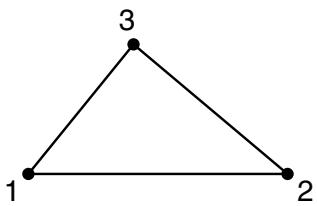
text_image 3 1 2
3 - node element ![](images/page-990_37c1f6900bd5b0f2f232e0bd4739194675ee301756d55cc95ad79fc21bf2477e.jpg)
text_image 1 2 3 4
4 - node element ![](images/page-990_2a6f8038d831801095364fb8c582082e160b850368ad2a384c6da0589c75c66c.jpg)
flowchart ```mermaid graph TD 1 --> 2 1 --> 4 2 --> 3 2 --> 4 3 --> 4 3 --> 5 4 --> 5 4 --> 6 5 --> 6 6 --> 1 ```
6 - node element ![](images/page-990_b87271ab7ac91f299b70666816f27c8404da58945f937b6d40ac7f88e26944cb.jpg)
flowchart ```mermaid graph TD 1 --> 2 1 --> 5 1 --> 8 2 --> 3 2 --> 6 3 --> 7 3 --> 6 4 --> 7 4 --> 8 5 --> 8 6 --> 7 7 --> 8 ```
8 - node element